Motor oil viscosity chart
SAE J300 grades
This chart identifies SAE winter and high-temperature viscosity categories. It does not measure start-up flow, oil pressure or protection. Match the grade and required specifications in the owner’s manual.
Swipe or scroll sideways to inspect the full chart on small screens.
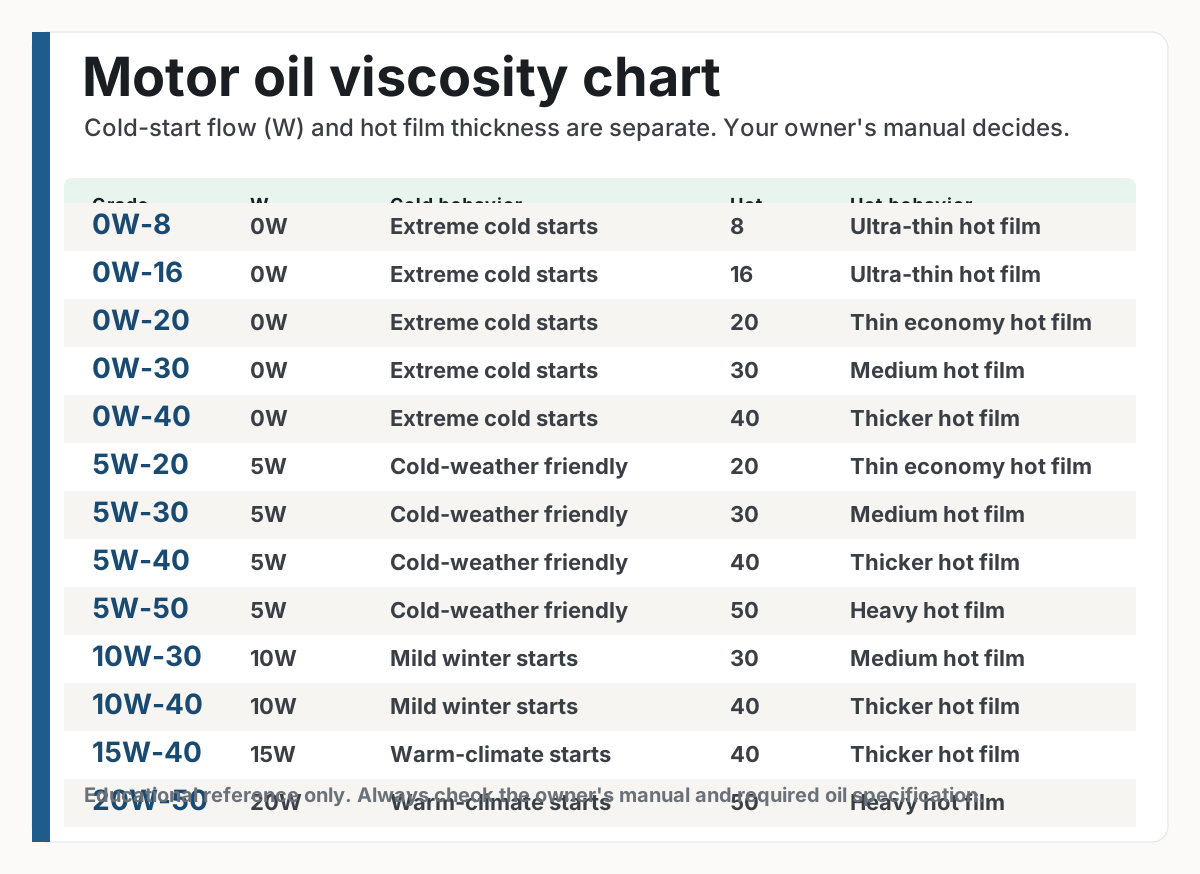
| Grade | Winter category | High-temperature category | W | Hot |
|---|---|---|---|---|
| 0W-8 | SAE 0W | SAE 8 | 0W | 8 |
| 0W-16 | SAE 0W | SAE 16 | 0W | 16 |
| 0W-20 | SAE 0W | SAE 20 | 0W | 20 |
| 0W-30 | SAE 0W | SAE 30 | 0W | 30 |
| 0W-40 | SAE 0W | SAE 40 | 0W | 40 |
| 5W-20 | SAE 5W | SAE 20 | 5W | 20 |
| 5W-30 | SAE 5W | SAE 30 | 5W | 30 |
| 5W-40 | SAE 5W | SAE 40 | 5W | 40 |
| 5W-50 | SAE 5W | SAE 50 | 5W | 50 |
| 10W-30 | SAE 10W | SAE 30 | 10W | 30 |
| 10W-40 | SAE 10W | SAE 40 | 10W | 40 |
| 15W-40 | SAE 15W | SAE 40 | 15W | 40 |
| 20W-50 | SAE 20W | SAE 50 | 20W | 50 |
How this chart is built
Grades shown 13 Each row links to its own grade explainer.
Cold-start bands 0W, 5W, 10W, 15W, 20W
Winter numbers identify different low-temperature test requirements, not a measured flow
rate.
Hot-thickness bands 8, 16, 20, 30, 40, 50
The second number identifies the high-temperature viscosity category, not an oil quality
rating.
See it on a temperature scale
Explore the winter and high-temperature category labels for 0W-20.
At 20 °C, 0W does not specify how quickly 0W-20 reaches engine parts.
Frequently asked questions
What does the W in an oil grade mean?
W stands for winter. The winter category identifies low-temperature cranking and pumping test requirements; it is not a measured flow time.
Is a higher second number better?
Not better — just thicker when hot. The right second number is the one your engine was designed for, listed in your manual.